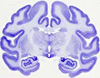
These changes were restricted to the subregion of the inferior colliculus that received optically displaced input, the rostral ICX, and were not evident in the caudal ICX or central nucleus. 

In the ventral forebrain, sucrose sham licking increased Fos in the bed nucleus of the stria terminalis, central nucleus of amygdala, and the shell of nucleus accumbens.
Many studies from our laboratories have demonstrated that circuitry that includes the amygdala central nucleus (CeA), the cholinergic neurons in the substantia innominata/nucleus basalis region and their innervation of the posterior parietal cortex is critical for this surprise-induced enhancement of attention in learning.
Neurons in the central nucleus of the inferior colliculus (IC) receive excitatory and inhibitory inputs from both lower and higher auditory nuclei.
Measuring fear-potentiated startle test using conditioned stimuli that vary in length we suggest that the central nucleus of the amygdala (CeA) and the lateral division of the bed nucleus of the stria terminalis (BNST(L)) are involved in short-term versus long-term fear responses we call phasic versus sustained fear, respectively.
This central nucleus, and in particular the synapse between the sensory afferent and second-order NTS cell, possesses a remarkable degree of plasticity in response to a variety of stimuli, both acute and chronic.
The present study examined the effect of pulse duration on frequency selectivity of neurons in the central nucleus of the inferior colliculus (IC) of the big brown bat.
This study shows that the recovery cycle of most duration-selective neurons in the bat central nucleus of the inferior colliculus neurons varies with biologically relevant pulse-echo (P-E) duration and amplitude.
Results showed numerous VGLUT1 and 2 immunolabeled terminals in the central nucleus, lateral cortex and dorsal cortex. VGLUT2 immunolabeled terminals were numerous on the soma and proximal dendrites of many medium-to-large and large neurons in the central nucleus and medium to large neurons in the dorsal cortex. There were more VGLUT2 terminals than VGLUT1 in all divisions and more VGLUT2 terminals in dorsal and lateral cortices than in the central nucleus. This study shows that VGLUT1 and VGLUT2 differentiate complementary patterns of glutamatergic inputs into the central nucleus, lateral and dorsal cortex of the inferior colliculus with VGLUT1 endings predominantly on the dendrites and VGLUT2 on both dendrites and somas..
The highest levels of neuronal staining are seen in the dorsal and lateral cortices, and the commissural nucleus, making them readily distinguishable from the ventro-lateral part of the central nucleus where nNOS expression in neuropil and somata is minimal. Dorso-medially, and caudally, however, the region of nNOS expression extends from the dorsal cortex into the area normally designated as the central nucleus, and nNOS is expressed by neurons characteristic of this subdivision. Our findings support the idea of a gradual transition in cell properties rather than a distinct boundary between the central nucleus and the dorsal cortex.
These include: the medial preoptic nucleus; median and lateral preoptic area; medial division of the bed nucleus of stria terminalis; paraventricular nucleus; central nucleus of the amygdala; dorsal hypothalamic area/dorsomedial hypothalamus; lateral hypothalamic area; lateral, ventrolateral and dorsomedial divisions of the periaqueductal grey; dorsal raphe nuclei; parabrachial nuclei; Kölliker-Fuse nucleus; intertrigeminal region; rostral ventrolateral medulla; lateral parafacial region; and the ventral respiratory group.
lateral lemniscus, central nucleus of IC, dorsal cortex of IC), they generally exhibited similar threshold versus phase duration, threshold versus pulse rate, and pitch versus pulse rate curves.
A potential DYN/CRF afferent is the central nucleus of the amygdala (CeA).
Abnormalities in GABA levels in the central nucleus of the inferior colliculus (CNIC) of the epilepsy-prone hamster (GPG/Vall) were evaluated by using immunohistochemistry, densitometry and high performance liquid chromatography (HPLC).
Axonal projections from the dorsal nucleus of the lateral lemniscus (DNLL) distribute contralaterally in a pattern of banded layers in the central nucleus of the inferior colliculus (IC). A lipophilic carbocyanine dye, 1,1'-dioctadecyl-3,3,3',3'-tetramethylindocarbocyanine perchlorate (DiI), was placed in the dorsal tegmental commissure of Probst to label decussating DNLL axons that end in the central nucleus of the contralateral IC. The distribution of labeled fibers across the central nucleus of the IC was analyzed in digital images by comparing the pattern of labeling with a sine model of periodic distribution of banded layers.
Axons terminate throughout the central nucleus and also in at least three distinct regions outside the central nucleus: a caudomedial region in the dorsal cortex, the ventrolateral nucleus and the rostral pole nucleus. Projections from the dorsal and ventral cochlear nuclei appear to overlap almost completely, although those from the dorsal cochlear nucleus may be slightly more widespread at the boundaries of the central nucleus.
Alcohol-preferring (P) rats, stereotaxically implanted with bilateral guide cannulae into the nucleus accumbens, ventral tegmental area, and the central nucleus of the amygdala were given 30% alcohol and water in a 24h voluntary two-bottle choice paradigm. The data show reduced alcohol intake by 32-49.5% after 100-pmol glycyl-glutamine into reward sites (nucleus accumbens, ventral tegmental area, and central nucleus of the amygdala), but not after injections into control sites dorsal to reward sites.
Although the intended target was the central nucleus of the inferior colliculus (ICC), the electrode array was implanted into different locations across patients (i.e., ICC, dorsal cortex of inferior colliculus, lateral lemniscus).
The inferior colliculus (IC) is the major component of the auditory midbrain and contains three major subdivisions: a central nucleus, a dorsal cortex, and a lateral cortex (LC). In both species, the deep lateral cortex is marked by a transition between the nicotinamide adenine dinucleotide phosphate-diaphorase (NADPH-d) rich superficial cortex and a cytochrome oxidase (CO) rich central nucleus. A medial band of axons terminated in the central nucleus, while shorter bands were located laterally and oriented nearly perpendicularly to the medial bands. In the cat, the bands were located in a region that was previously ascribed to the central nucleus, but now considered to belong to the third, deepest layer of the LC, the ventrolateral nucleus.
Our earlier study shows that echo duration selectivity of most neurons in the central nucleus of the inferior colliculus of Eptesicus fuscus improves with decreasing pulse duration and pulse-echo gap.
In the current study, we show that most neurons in the central nucleus of the inferior colliculus discharge maximally to a best duration and they have better echo frequency selectivity when the duration of both echo and pulse matches the best duration.
In the present study, we examined the effects of SS on 5-HT-mediated GABAergic spontaneous inhibitory postsynaptic currents (sIPSCs) from neurons of the central nucleus of rat inferior colliculus with whole-cell patch-clamp technique and brain slice preparation.
Rats received an anorexigenic dose of PYY(3-36), and the number of neurons expressing Fos, an indicator of neuronal activation, was determined in anterior hypothalamus (AH), arcuate nucleus (ARC), dorsomedial hypothalamus (DMH), lateral hypothalamus (LH), ventromedial hypothalamus (VMH), central nucleus of the amygdala (CeA), area postrema (AP), and caudal medial nucleus tractus solitarius (cmNTS), commissural NTS (cNTS), and gelatinosus NTS (gNTS).
This study investigated the effects of MOC activation on the responses of single neurons in the central nucleus of the inferior colliculus (CNIC) of anaesthetized guinea pigs.
Previous studies show that activation of the gustatory cortex (GC), bed nucleus of the stria terminalis (BNST), central nucleus of the amygdala (CeA), and lateral hypothalamus (LH) inhibits PBN taste responses, GABAergic neurons are present in these forebrain regions, and GABA reduces the input resistance of PBN neurons.
The present study examined how a weak noise may affect the amplitude sensitivity of neurons in the mouse central nucleus of the inferior colliculus (IC) which receives convergent excitatory and inhibitory inputs from both lower and higher auditory centers.
Corticotropin-releasing factor (CRF) is a peptide neurotransmitter with high numbers of cell bodies found in limbic regions of the rat brain including the oval nucleus of the bed nucleus of the stria terminalis (BNSTov) and central nucleus of the amygdala (CeA) as well as in the paraventricular nucleus of the hypothalamus (PVN).
Multichannel techniques were used to assess the frequency specificity of activation in the central nucleus of the inferior colliculus (CIC) produced by electrical stimulation of localized regions within the ventral cochlear nucleus (VCN).
We observed the changes of receptive fields in the central nucleus of the inferior colliculus of the midbrain evoked by focal electrical stimulation of the ventral division of the medial geniculate body of the thalamus.
The effect of MCAO on autonomic tone was assessed by monitoring vagal and renal efferent nerve activities before and following systemic administration of either estrogen or saline and the bilateral microinjection of the estrogen receptor antagonist, ICI 182, 780, into several autonomic nuclei (the intrathecal space of the spinal cord, nucleus tractus solitarius, nucleus ambiguus, rostral ventrolateral medulla, parabrachial nucleus, central nucleus of the amygdala or ventral posteromedial thalamus). The presence of ICI 182, 780 in the intrathecal space of the spinal cord, nucleus ambiguous, nucleus tractus solitarius, rostral ventrolateral medulla, parabrachial nucleus, or central nucleus of the amygdala prior to the administration of estrogen resulted in a significant attenuation (ranging from 79% to 94 %) in the estrogen-induced recovery of autonomic function following MCAO.
In situ hybridization was used to examine TASK-1, TASK-5, TWIK-1 and THIK-2 in the central nucleus, dorsal cortex and lateral (external) cortex of the IC in normal hearing animals and at 3 weeks following deafening. Three weeks following deafening there was a significant decrease in the number of neurons expressing TASK-1 and THIK-2 in the IC, while TASK-5 had significant decreases in the central nucleus and dorsal cortex and TWIK-1 in the lateral and dorsal cortices..
The central nucleus of the inferior colliculus (IC) is a laminated structure that receives multiple converging afferent projections. By birth, the crossed and uncrossed projections had reached the IC and were distributed across the frequency axis of the central nucleus.
Lard-associated changes in c-Fos(+) cell numbers were observed in the nucleus of the tractus solitarius, lateral parabrachial nucleus, central nucleus of the amygdala, ventral tegmental area, nucleus accumbens shell and the prefrontal cortex, and were associated with lower levels of triglycerides and free fatty acids.
Recent work shows that, as in the primate, the subdivisions of the rat orbitofrontal cortex issue different patterns of projections to the amygdala, with intriguing variations in the relative distribution of projections to the sensory-related basal areas compared with output areas, such as the central nucleus.
Following spectrally and temporally precisely defined unilateral electrical intracochlear stimulation (EIS) that corresponded in strength to physiological acoustic stimuli and lasted for 2 h under anesthesia, we characterized those neuronal cell types in ventral (VCN) and dorsal cochlear nucleus (DCN), lateral superior olive (LSO) and central nucleus of the inferior colliculus (CIC) of the rat brain that expressed IEGs.
The aim of the present study was to determine whether cells in the central nucleus of the inferior colliculus (CNIC) of normal rats respond selectively to complex auditory signals, such as species-specific vocalizations, and compare their responses to those obtained in neonatal bilateral enucleated (P2-P3) adult rats.
The present study examines how weak noise may affect the auditory sensitivity of neurons in the central nucleus of the mouse inferior colliculus (IC) which receives convergent excitatory and inhibitory inputs from both lower and higher auditory centers.
The inferior colliculus central nucleus (ICC) has potential as a new site for an auditory prosthesis [ i.e., auditory midbrain implant (AMI)] for deaf patients who cannot benefit from cochlear implants (CIs).
The complex anatomical structure of the central nucleus of the inferior colliculus (ICC), the principal auditory nucleus in the midbrain, may provide the basis for functional organization of auditory information.
The main area of the forebrain of FLT rats sacrificed at R + 1, showing an increased expression of Fos, was the central nucleus of the amygdala (CeA) (cf.
It is unknown, however, how ITD and ILD are combined at the site of ITD and ILD convergence in the lateral shell of the central nucleus of the inferior colliculus (ICcl) and therefore whether ICx is the first site in the auditory pathway where multiplicative tuning to ITD- and ILD-dependent signals occurs.
Compound neuronal responses evoked from the sites in the VCN were recorded periodically in the central nucleus of the contralateral inferior colliculus (ICC).
Averaged evoked potentials were measured using electrodes inserted into the central nucleus of the IC to obtain the binaural interaction component (BIC), computed by subtracting the sum of the two monaural responses from the binaural response.
The ventral division of the medial geniculate nucleus (MGv) receives almost all of its ascending input from the ipsilateral central nucleus of the inferior colliculus (CNIC).
Microinjection of glutamate into the central nucleus of the amygdala produced a dose-related inhibition of the discharge rate of LC neurons in nerve-injured animals but no significant effect on discharge rates in control groups.
Recent evidence suggests that the amygdala central nucleus (CeA) and midbrain-striatal dopamine systems are critically involved in the alteration of attentional and emotional processing of initially neutral stimuli by associative learning.
Axonal projections from the lateral superior olivary nuclei (LSO), as well as from the dorsal cochlear nucleus (DCN) and dorsal nucleus of the lateral lemniscus (DNLL), converge in frequency-ordered layers in the central nucleus of the inferior colliculus (IC) where they distribute among different synaptic compartments. Thus, well before hearing onset in ferret (P28-30), three different afferent projections have segregated into banded compartments along layers in the central nucleus of the ferret IC.
In the present study, unilateral cochlear ablations were performed in adult ferrets to evaluate possible time-dependent modifications of synaptophysin and insulin-like growth factor-1 (IGF-1) in the central nucleus of the inferior colliculus (CNIC).
Here we demonstrate that despite two stages of convergence and an effective loss of phase information, the auditory system of the anesthetized barn owl displays a graceful transition to an envelope coding that preserves the spectrotemporal information throughout the ITD pathway to the neurons of the core of the central nucleus of the inferior colliculus..
Bilateral focal microinjection of a NMDA antagonist, 2-amino-7-phosphonoheptanoate (AP7), into either central nucleus or lateral nucleus of the amygdala (LAMG) significantly reduced AGS.
However, no difference in the number of Fos-labeled neurons was found between the central nucleus of the IC on either side, indicating that direct corticofugal modulation occurs only in the ECIC and DCIC.
FRA expression affected also at the reentry pontine and diencephalic structures, such as the lateral parabrachial nucleus and the central nucleus of the amygdala, which are known to contribute to the occurrence of pontine waves and the related bursts of REM.
The inferior colliculus (IC) can be divided into three anatomical subdivisions: the central nucleus (ICc), the dorsal cortex (ICd) and the external cortex (ICx).
The goal of this study was to assess if this approach can be extended to a lateral supracerebellar infratentorial approach to enable insertion of an auditory midbrain implant (AMI) penetrating array along the tonotopic gradient of the inferior colliculus central nucleus (ICC).
Fluorogold was iontophoresed into the bed nucleus of stria terminalis (BST), central nucleus of the amygdala (CEA), paraventricular nucleus of the hypothalamus (PVN), and the pontine lateral parabrachial nucleus (PBL; an important component of ascending viscerosensensory pathways) followed 2 weeks later by intraperitoneal injection of lipopolysaccharide (LPS, 0.1 mg/kg) or saline.
Here, we show that the main properties of psychophysically defined critical bands, as measured in narrow-band noise masking tests (species-specific frequency dependence and intensity independence of the bandwidths), are present in single neurons of the mouse's central nucleus of the inferior colliculus.
However, there is some anatomical evidence suggesting that a substantial number of fibers from the primary auditory cortex (A1) project into the IC central nucleus (ICC) and appear to be tonotopically organized.
The central nucleus of the inferior colliculus (IC) is a major integrative center in the central auditory system.
We wished to determine whether neurones of the nucleus of the solitary tract (NTS) or ventrolateral medulla (VLM) convey visceral afferent information to the central nucleus of the amygdala (CeA) or periaqueductal grey region (PAG), structures that play a key role in adaptive autonomic responses triggered by stress or fear.
LiCl did not increase Fos above control levels in the central nucleus of the amygdala, bed nucleus of the stria terminalis (BNST), or paraventricular nucleus of the hypothalamus on P0 but did on P7 and later.
(Lane Cove, Australia), we developed a human prototype AMI, which is designed for electrical stimulation along the well-defined tonotopic gradient of the inferior colliculus central nucleus (ICC).
GABA immunoreactivity was expressed by small, medium and large neurons and distributed in the central nucleus and the pericentral nucleus of the inferior colliculus. Co-localization of GABA and MOR receptors was observed in neurons and nerve terminals in the central nucleus, dorsal cortex and external cortex of the inferior colliculus.
Atipamezole, an alpha(2)-adrenoceptor antagonist, or saline was administered systemically or microinjected into the locus coeruleus, the lateral parabrachial nucleus, the central nucleus of the amygdala, the midbrain periaqueductal gray, and/or through an intrathecal (i.t.) catheter to the spinal cord.
Standard electrophysiology and virtual auditory stimuli were used to investigate the influence of interaural time difference on the azimuthal tuning of neurons in the core and the lateral shell of the central nucleus of the inferior colliculus of the barn owl. These results suggest that interaural time difference is an important determinant of azimuthal tuning in all neurons of the core and lateral shell of the central nucleus of the inferior colliculus, and is the only determinant in many of the neurons from the core..
After blocking the massive GABAergic projection from the dorsal nucleus of the lateral lemniscus (DNLL) to the contralateral central nucleus of the inferior colliculus (ICC) in anesthetized rats, a reactive increase in the efficacy of other inhibitory circuits in the ICC (separable because of the dominant ear that drives each circuit) was demonstrated with physiological measures-single-neuron activity and a neural-population-evoked response.
During postnatal development, ascending and descending auditory inputs converge to form fibrodendritic layers within the central nucleus of the inferior colliculus (IC). The present results suggest that cochlear ablation after DNLL bands have formed may affect the maintenance of banded DNLL projections within the central nucleus of the IC..
Previous independent studies have demonstrated efferent projections from the NTS to the nucleus paragigantocellularis (PGi) and the central nucleus of the amygdala (CNA) in rat brain.
Effects of carboplatin-induced partial loss of inner hair cells on rate-level functions of neurons in the central nucleus of the inferior colliculus of the same chinchillas before and 1-3 months after carboplatin treatment were examined.
We investigated in young rats (P10-P14) the effects of taurine on the neuronal responses and synaptic transmissions in the central nucleus of the inferior colliculus (ICC) with a brain slice preparation and with whole-cell patch-clamp recordings.
We propose the central nucleus of the inferior colliculus (ICC) as the potential site.
They also send minor axonal projections to the midbrain ventral tegmental area, lateral and paraventricular hypothalamic nuclei, central nucleus of the amygdala, and periaqueductal gray matter.
NADPH-d and noxious-stimuli induced Fos staining were also examined in tissue containing PB cells labeled by the retrograde transport of fluogold (FG) injected into the central nucleus of the amygdala (CeA).
These include pyramidal cells of the hippocampal CA1 and CA2 regions and dentate gyrus granule cells, cerebellar Purkinje neurons, cortical pyramidal neurons, neurons of the central nucleus of the amygdala and parvocellular neurons of the hypothalamic paraventricular nucleus.
Previous research from this laboratory showed that a neural circuit that includes the amygdala central nucleus (CeA), substantia nigra pars compacta (SNc) and dorsolateral striatum (DLS) is essential for the learning and expression of one example of conditioned orienting, the rearing of rats to visual stimuli paired with food.
Five micrograms per kilogram decreased intake and increased the number of CFLI cells in four subnuclei of the nucleus tractus solitarius (NTS), in arcuate nucleus (ARC), and in central nucleus of the amygdala (CeA).
Previous studies show that GABA-mediated duration selectivity of neurons in the central nucleus of the inferior colliculus (IC) of many animal species behave as band-, short-, long- and all-pass filters to sound duration.
The central nucleus of the inferior colliculus (CNIC) contains different types of neurons and is a source of ascending projection to the medial geniculate body (MGB), commissural projection to the contralateral IC, direct descending projection to the cochlea nucleus (CN) and indirect projection to the CN via the superior olivary complex (SOC).
This study describes mechanisms that underlie neuronal selectivity for the direction and rate of frequency-modulated sweeps in the central nucleus of the inferior colliculus (ICC) of the pallid bat (Antrozous pallidus).
The present study surveyed the ultrastructure of the central nucleus of the inferior colliculus in postnatal day (P) P4, P7, P14, and P28 ferrets, prior to the onset of hearing at the end of the first postnatal month with the goal of beginning to characterize the time course of synapse formation in relation to the development of afferent projection patterns within the IC.
Unilateral auditory deprivation decreased glycine receptor alpha1 and glutamic acid decarboxylase 67 expression in the contralateral central nucleus of the inferior colliculus. Thus, unilateral cochlear removal resulted in a selective and long-term decrease in the amount of the glycine receptor alpha1 subunit and of glutamic acid decarboxylase 67 in the contralateral central nucleus of the inferior colliculus. These changes most probably result from the induced asymmetry of excitatory auditory inputs into the central nucleus of the inferior colliculus and may be one of the mechanisms involved in the tinnitus frequently encountered in patients suffering from a sudden hearing loss..
The central nucleus of the amygdala (CeA) has been shown to modulate salt intake in response to aldosterone, so we investigated the connections between these two sites.
The present study examines the echo duration selectivity of neurons in the central nucleus of the bat inferior colliculus (IC) under stimulation conditions of single pulses and pulse-echo (P-E) pairs.
Previous reports from our laboratories demonstrated that circuitry, including the amygdala central nucleus (CeA), the cholinergic neurons of the substantia innominata/nucleus basalis region, and their innervation of the posterior parietal cortex, is critical to these surprise-induced enhancements of attention in associative learning.
In this study, we investigated the effects of electrical stimulation of the inferior colliculus central nucleus (ICC) on primary auditory cortex (A1) activity to determine the potential benefits of an auditory midbrain implant (AMI).
The effects of corticotrophin-releasing factor administration to the serotonin cell body regions of the dorsal raphe nucleus on fear behavior, behavioral activity, and extracellular serotonin levels were assessed in freely moving rats with microdialysis probes implanted into the central nucleus of the amygdala and the medial prefrontal cortex. Infusion of corticotrophin-releasing factor (0.5 microg) into the dorsal raphe rapidly induced freezing behavior, which was positively correlated with an immediate increase in serotonin release in the central nucleus of the amygdala.
Identical stimuli were used to test adaptation in the lateral shell of the central nucleus of the inferior colliculus (ICCls), which provides input directly to the ICX.
They also send minor axonal projections to the midbrain ventral tegmental area, lateral and paraventricular hypothalamic nuclei, central nucleus of the amygdala, and periaqueductal gray matter.
Three extrahypothalamic areas, the nucleus of the tractus solitari (NTS), the central nucleus of the amygdala (CeA) and the dorsal raphe nucleus (DRN), all potentially involved in peripheral ghrelin signalling of appetite control mediated by the glucose levels were examined.
Neurons in the primary auditory fields in the middle EG project to the lateral nucleus (LN) of the ipsilateral IC and bilaterally to the dorsal cortex and dorsal part of the central nucleus (CN).
In unanesthetized chinchillas, we determined excitatory and inhibitory response regions of neurons in the central nucleus of the inferior colliculus (ICc).
It has been shown that electrical stimulation of the central nucleus of the inferior colliculus (IC) at freezing or escape thresholds activates different neural circuits in the brain.
BayK 8644-induced Fos expression in Ca(V)1.2(DHP-/-) mice indicating predominantly Ca(V)1.3 L-type calcium channel-mediated activation was noted in more restricted neuronal populations (20 of 80), in particular in the central amygdala, the bed nucleus of the stria terminalis, paraventricular hypothalamic nucleus, lateral preoptic area, locus coeruleus, lateral parabrachial nucleus, central nucleus of the inferior colliculus, and nucleus of the solitary tract.
Corticotectal projections of both RM and CM targeted the dorsomedial quadrant of the inferior colliculus, whereas the CM projection also included a pericentral extension around the ventromedial and lateral portion of the central nucleus.
After UCA, Western blotting was employed to quantify CREB-P levels and illustrate CREB levels in the anteroventral (AVCN), posteroventral (PVCN), and dorsal (DCN) cochlear nucleus; the lateral (LSO) and medial superior olive (MSO); the medial nucleus of the trapezoid body (MNTB); and the central nucleus of the inferior colliculus (ICc) for up to 145 days.
Recent studies have shown that selective electrical stimulation within the IC central nucleus (ICC) produces frequency-specific reductions of neural activity in the contralateral cochlea (Ota, Y., Oliver, D.L., Dolan, D.F., 2004.
The injection sites for both group 1 and group 2 were located in the central nucleus, but those for group 1 tended to be located laterally relative to those for group 2, which were located more medially and caudally. The injection sites for group 3 cases lay outside the central nucleus of the IC. The two regions of the central nucleus of the IC, distinguished on the basis of connectivity, are likely to subserve different functions..
The norepinephrine transporter in the monkey brain was distributed heterogeneously, with highest levels occurring in the locus coeruleus complex and raphe nuclei, and moderate binding density in the hypothalamus, midline thalamic nuclei, bed nucleus of the stria terminalis, central nucleus of the amygdala, and brainstem nuclei such as the dorsal motor nucleus of the vagus and nucleus of the solitary tract.
In contrast, IO conditioning led to activation only in the central nucleus of amygdala.
BACKGROUND: The basolateral complex (BLA) and the central nucleus of the amygdala (CeA) are believed to mediate the expression of affective responses.
In the present study, unilateral cochlear ablations were performed in adult ferrets in order to determine whether an upregulation of the calretinin immunostained plexus in the central nucleus of the inferior colliculus occurs and if so, what the time course of this upregulation is. Accordingly, the mean gray level and the calretinin-immunostained area of the axonal plexus in the central nucleus of the inferior colliculus were evaluated at 1, 20 and 90 days after cochlear ablation. In ablated animals, both the mean gray level and the immunostained area of the plexus increased in the central nucleus of the inferior colliculus contralateral to the lesion compared with both the ipsilateral side and unoperated animals. In a previous study in young ferrets, the immunostained area of the plexus in the central nucleus of the inferior colliculus contralateral to the lesion increased 200% compared with control ferrets [ J Comp Neurol 460 (2003) 585], whereas it increased only 33% in adult ferrets. These findings suggest that 1) calretinin upregulation in the contralateral central nucleus of the inferior colliculus following cochlear ablation occurs by 24 h after cochlear ablation and 2) there is an age-related decline in the magnitude of this upregulation after cochlear ablation..
The central nucleus of the inferior colliculus (CNIC) is comprised of an orderly series of fibrodendritic layers.
Data analysis included comparisons across IC subdivisions and across frequency regions within the central nucleus of the IC. The results show that: 1) 25% of the IC neurons are GABAergic; 2) there are more GABAergic neurons in the central nucleus of the IC than previously estimated; 3) GABAergic neurons are larger than non-GABAergic; 4) GABAergic neurons receive less GABA and glycine puncta than non-GABAergic; 5) differences across frequency regions are minor, except that the non-GABAergic neurons from high frequency regions are larger than their counterparts in low frequency regions; 6) differences within the laminae are greater along the dorsomedial-ventrolateral axis than along the rostrocaudal axis; 7) GABA and non-GABAergic neurons receive different numbers of puncta in different IC subdivisions; and 8) GABAergic puncta are both apposed to the somata and in the neuropil, glycinergic puncta are mostly confined to the neuropil..
The central nucleus of the inferior colliculus is a laminated structure composed of oriented dendrites and similarly oriented afferent fibers that provide a substrate for tonotopic organization. Here, we investigated the axons from the cochlear nuclei that terminate in the central nucleus of the cat and rat. After characterization of the best frequency of the neurons at the injection sites in the cochlear nucleus, the neurons were labeled with dextran in order to visualize their axons and synaptic boutons in the central nucleus.
Cells that phase-locked were mainly located in the central nucleus but also occurred in the dorsal cortex and external nucleus. The upper limits in the three divisions were central nucleus, >1,000 Hz; dorsal cortex, 700 Hz; external nucleus, 320 Hz. The mean latencies also varied and were central nucleus, 8.2 +/- 2.8 (SD) ms; dorsal cortex, 17.2 ms; external nucleus, 13.3 ms. We conclude that many cells in the central nucleus receive direct inputs from the brain stem, whereas cells in the external and dorsal divisions receive input from other structures that may include the forebrain..
Our study addressed these issues by characterizing the effects of common methods of tinnitus induction on spontaneous activity in the central nucleus of the inferior colliculus (ICC).
Retrogradely labeled neurons were found in a large area, including the medullary and pontine medial and lateral tegmental field; dorsomedial, lateral, and ventrolateral periaqueductal gray matter (PAG); posterior hypothalamus; medial preoptic area (MPO); bed nucleus of the stria terminalis; central nucleus of the amygdala; and infralimbic, prelimbic, and insular cortices.
Likewise, PBG injections had no significant effects on c-Fos expression in other central regions involved in cardiorespiratory control or cardiorespiratory reflexes (selected non-catecholaminergic nuclei in the medulla and midbrain periaqueductal gray, the paraventricular nucleus of the hypothalamus and the central nucleus of the amygdala).
Defensive responses to a cat were observed in rats given excitotoxic lesions of the central nucleus of the amygdala (ACe), dorsolateral periaqueductal gray (dlPAG), ventral periaqueductal gray (vPAG), or sham lesions.
The central nucleus of the inferior colliculus (ICC) receives inputs from all parts of the auditory brainstem and transmits the information to the forebrain.
Retrograde neural tracing demonstrated that neurons activated by YO at 5.0 mg/kg BW included medullary and pontine neurons that project to the central nucleus of the amygdala and to the lateral bed nucleus of the stria terminalis, the latter region receiving comparatively greater input by Fos-positive neurons.
The lateral and basolateral nuclei of the amygdala (LaA and BLA, respectively) serve as a filter for unconditioned and conditioned aversive information that ascends to higher structures from the brainstem, whereas the central nucleus of the amygdala (CeA) is considered to be the main output for the defense reaction.
The majority of duration-sensitive neurons were localized outside the central nucleus of the IC, especially in the dorsal cortex, where more than one-half of the neurons sampled had long-pass selectivity for duration. Band-pass duration tuned neurons were only found outside the central nucleus.
The pontine parabrachial nucleus (pPB) sends a massive projection to the central nucleus of the amygdala (CeA) and lateral bed nucleus of the stria terminalis (BSTL), both regions belonging to a broader macrostructure, the central extended amygdala (EAc).
Its major efferents from the central nucleus (Ace) to the basal forebrain, hypothalamus and brainstem permit it to influence sleep mechanisms.
Fiber connections of the presumed auditory portion of the semicircular torus or the central nucleus (TSc) as well as other central and peripheral auditory structures were studied by tract-tracing methods in carp and goldfish.
The highest density of immunoreactive fibers was found in the motor trigeminal nucleus, the laminar and alaminar spinal trigeminal nuclei, the facial nucleus, the marginal nucleus of the brachium conjunctivum, the locus coeruleus, the cuneiform nucleus, the dorsal motor nucleus of the vagus, the postpyramidal nucleus of the raphe, the lateral tegmental field, the Kölliker-Fuse nucleus, the inferior central nucleus, the periaqueductal gray, the nucleus of the solitary tract, and in the inferior vestibular nucleus. Immunoreactive cell bodies containing neurokinin B were observed, for example, in the locus coeruleus, the dorsal motor nucleus of the vagus, the median division of the dorsal nucleus of the raphe, the lateral tegmental field, the pericentral nucleus of the inferior colliculus, the internal division of the lateral reticular nucleus, the inferior central nucleus, the periaqueductal gray, the postpyramidal nucleus of the raphe, and in the medial nucleus of the solitary tract.
Effects of unilateral noise exposure on spontaneous activity (SA) in the anteroventral and dorsal cochlear nuclei (AVCN and DCN) and the central nucleus of the inferior colliculus (ICc) were studied in cortically intact and decorticate rats.
To examine whether cortical descending function and NB contributions to collicular plasticity are different between the bat and mouse and to extend the findings in the bat, we induced plasticity in the central nucleus of the mouse inferior colliculus by a tone paired with electrical stimulation of the NB (hereafter referred to as tone-ES(NB)).
This is accomplished by projections connecting the central nucleus of the amygdala (CeA) to the brain stem and to hypothalamic structures, which organize fear responses.
This work addresses the nature of the convergence of localization information in the central nucleus of the inferior colliculus (ICC).
Neurons immunopositive for TH but not DBH or PNMT were observed in the dorsal cortex and dorsal horn of the central nucleus of the IC and ventral and intermediate lemniscus. In the central nucleus of the IC and dorsal lateral lemniscus many lightly labeled TH neurons were also DBH positive.
Nitroglycerin and sodium nitroprusside induced a similar pattern of neuronal activation in several areas, which include the paraventricular and supraoptic nuclei of the hypothalamus, central nucleus of the amygdala, parabrachial nucleus, locus coeruleus, ventrolateral medulla and nucleus tractus solitarius.
After injecting retrograde tracer fluorogold into the Mo5, we observed retrograde-labeled neurons in brainstem areas and in a few forebrain nuclei, such as the central nucleus of the amygdala, and the parasubthalamic nucleus. By using dual-labeled immunohistochemistry, we found tyrosine hydroxylase (a catecholamine-processing enzyme) immunoreactive fibers in close apposition to retrograde-labeled neurons in brainstem nuclei, in the central nucleus of the amygdala and the parasubthalamic nucleus, suggesting the occurrence of synaptic contacts.
In addition to being the principal outputs, CaMKII cells were in direct contact with axonal boutons emanating from the main source of input to ICX, the lateral shell of the central nucleus of the inferior colliculus (ICCls).
We found an increase in distention-induced Fos in preshocked rats in the nucleus tractus solitarius and a weaker effect in the central nucleus of the amygdala.
By using basal c-Fos expression as a marker for cellular activation we found a significant reduction in c-Fos expression in the central nucleus of the inferior colliculus in iron-adequate rat pups exposed to CO.
Previous studies have shown a modulatory influence of limbic forebrain areas, such as the central nucleus of the amygdala and lateral hypothalamus, on the activity of taste-responsive cells in the nucleus of the solitary tract (NST). These results combine with excitatory and inhibitory modulation of NST neurons by the insular cortex, lateral hypothalamus and central nucleus of the amygdala to demonstrate extensive centrifugal modulation of brainstem gustatory neurons..
The central nucleus of amygdala (CeA) participates in cardiovascular regulation during emotional behaviour but it has not been established whether any of these effects are mediated through its direct connections to blood pressure-regulating neurones in the rostral ventrolateral medulla (RVLM).
One of the key areas that links psychologically induced stress with the blood pressure-regulatory system is the central nucleus of the amygdala (CeA).
These projections target the central nucleus of the IC (CNIC) ipsilaterally and the IC cortices bilaterally, with the ipsilateral component predominant.
The amygdala central nucleus (CeA) plays an important part in associative learning.
Several cell bodies and nerve terminals containing an intense CB1-like immunoreactivity were found in the pretectal central nucleus and posterior tuberculum, both lying in a transitional region between diencephalon and mesencephalon.
This study was designed to examine how corticotropin-releasing factor (CRF) neurons, together with substance P (SP) receptors in the paraventricular hypothalamic nucleus (PVN), central nucleus of the amygdala (CeA), and locus coeruleus (LC), are affected by stress.
Our results suggest that the GABA activity in peri-LC and PrH might regulate the LC-TH response, and also the CRH input from central nucleus of amygdala (CeA) and/or the bed nucleus of stria terminalis (BNST) might regulate the TH reactivity..
Moreover, neurotoxic lesions of the BLA enhance whereas those of the central nucleus of the amygdala (CeA) reduce the aversiveness of the electrical stimulation of the IC.
In turn, the LA would excite more neurons in the central nucleus (CE), leading to the generation of fear responses via their brainstem and hypothalamic projections.
Moreover, by using a transgenic mouse line expressing green fluorescent protein under the control of the melanocortin-4 receptor (MC4-R) promoter, we observed Y1-R mRNA expression in MC4-R-positive cells in several brain sites such as the PVH and central nucleus of the amygdala.
A subset of rats received retrograde neural tracer injections into the central nucleus of the amygdala (CeA) 7-10 days before odor exposure and perfusion.
Both long-term deafness and chronic electrical stimulation altered temporal resolution of neurons in the central nucleus (ICC) but not in the external nucleus.
RESULTS: In this update, the authors present a revision of data that demonstrates the existence of a "fear network", which has as its main point the central nucleus of the amygdale and includes the hypothalamus, the thalamus, the hippocampus, the periaqueductal gray region, the locus ceruleus and other brainstem structures.
Our previous studies showed an important role of group I metabotropic glutamate receptors (mGluRs) in pain-related synaptic plasticity and sensitization of neurons in the central nucleus of the amygdala (CeA).
Taste responses in the parabrachial nucleus (PBN) are significantly affected by stimulation or lesion of the central nucleus of the amygdala (CeA).
The central nucleus of the amygdala (CeA) is generally regarded as a control nucleus of subcortical target systems. Injections of the retrograde tracers Fluorogold and True Blue into target regions of the central nucleus of the amygdala, i.e., the substantia innominata (SI) and the caudal pontine reticular nucleus (PNC), revealed overlapping but otherwise distinct neuronal populations within mainly the medial division of the CeA.
Intraperitoneal L-NAME (30 mg/kg) given 30 min prior to LiCl significantly decreased lithium-induced c-Fos expression in the brain regions implicated in CTA learning, such as the hypothalamic paraventricular nucleus (PVN), central nucleus of amygdala (CeA), and nucleus tractus of solitarius.
Acoustically induced c-Fos expression in the central nucleus of the inferior colliculus to sub-AGS threshold tone stimulations displayed a greater level of neuronal activation in AGS-susceptible Frings, DBA/2J and noise-primed C57BL/6J mice compared to AGS-resistant C57BL/6J and CF1 mice.
Activation spread was estimated by recording multineuronal evoked activity along the cochleotopic axis of the central nucleus of the inferior colliculus (ICC).
The lateral hypothalamus (LH) and the central nucleus of the amygdala (CeA) exert an influence on ingestive behavior and are reciprocally connected to gustatory and viscerosensory areas, including the nucleus of the solitary tract (NST) and the parabrachial nuclei (PbN).
The central nucleus of the amygdala (CeA) is important for opioid analgesia through the projection to the periaquaductal gray (PAG).
In particular in its central nucleus, c-fos and arg3.1 IRN were found exclusively after the tinnitus-inducing treatment, suggesting that coactivation of the AC and the amygdala may by an essential feature of tinnitus-related activation..
Morphological features and functional implications of projections of the parabrachial nucleus to the central nucleus of the amygdala were investigated in the rat. An extremely dense concentration of labeled fibers was found in the lateral and lateral capsular subdivisions of the central nucleus of the amygdala, originating mainly from the external lateral and ventral lateral subnuclei of the parabrachial nucleus. In this paradigm, Fos immunoreactivity was found to be confined to the lateral and lateral capsular subdivisions of the central nucleus of the amygdala. With this approach, we were able to confirm that Fos-immunoreactive neurons in the central nucleus of the amygdala receive axosomatic terminals from the parabrachial nucleus. The present findings point out that parabrachial inputs to the central nucleus of the amygdala play a relevant role in regulating cardiovascular function..
In order to determine the specificity of expression of the 5.4-kb fragment of the GlyR alpha1 subunit gene promoter, we subsequently injected the plasmid DNA into the mouse central nucleus of the amygdala.
The latter was used here to measure how stimulation in the tonotopy of the mouse primary auditory cortex influences frequency tuning in the midbrain central nucleus of the inferior colliculus (ICC).
CNTFRalpha labeling first appeared in the central nucleus of the inferior colliculus (IC) by the end of the fourth week.
In the central nucleus of the inferior colliculus only a subpopulation of neurons showed HCN1 or HCN2 immunolabelling.
After ipsilateral injections of biotinylated dextran amine (BDA) into the central nucleus of the amygdala (ACe) and cholera toxin B subunit (CTb) into the motor trigeminal nucleus (Vm) in the rat, numerous BDA-labeled axons with bouton-like varicosities were distributed bilaterally with a clear-cut ipsilateral dominance in the parvicellular reticular formation (RFp), where many CTb-labeled neurons existed bilaterally with slightly ipsilateral dominance.
FAAH distribution in the amygdala was similar to that of the CB(1) cannabinoid receptor: evident signal in neuronal somata and proximal dendrites in the basolateral nucleus, and hardly any labelling in the central nucleus.
In turn, LA cells would excite more neurons in the central nucleus (CE) that, via their projections to the brain stem and hypothalamus, evoke fear responses.
Following tracer injections into the lateral valvular nucleus, neurons were labeled in the ipsilateral dorsal part of dorsal telencephalic area, corpus glomerulosum pars anterior, dorsomedial thalamic nucleus, central nucleus of the inferior lobe, mammillary body, semicircular torus, valvular and cerebellar corpus, in the bilateral rostral regions of the central part of dorsal telencephalic area, dorsal region of the medial part of dorsal telencephalic area, habenula, anterior tuberal nucleus, posterior tuberal nucleus, and spinal cord, and in the contralateral lateral funicular nucleus. Terminals from the corpus glomerulosum pars anterior, central nucleus of the inferior lobe, and mammillary body showed more diffuse distributions and were not confined to particular portions of the lateral valvular nucleus.
The central nucleus of the inferior colliculus (ICC) is a major site of synaptic interaction in the central auditory system.
No descending mossy fibers storing round vesicles were labelled from the central nucleus of the inferior colliculus.
We found that 90 min after oral ovalbumin (OVA) challenge, allergic mice present increased c-fos expression in emotionality-related brain areas such as the paraventricular nucleus of the hypothalamus (PVN) and the central nucleus of the amygdala (CeA).
The results show that the neurones of the central nucleus of the inferior colliculus do not react differently to self-produced and group mate vocalizations of the same type.
The role of potassium channels in regulating spontaneous firing and sound-evoked responses in the central nucleus of the inferior colliculus was studied by recording single-unit activity before and during iontophoretic application of a nonspecific potassium channel blocker, tetraethylammonium (TEA).
The major excitatory, binaural inputs to the central nucleus of the inferior colliculus (ICC) are from two groups of neurons with different functions-the ipsilateral medial superior olive (MSO) and the contralateral lateral superior olive (LSO).
We recorded from single cells in the free-tailed bat lateral superior olive (LSO), the first station where ILDs are coded, and the central nucleus of the inferior colliculus (ICC), which receives a strong projection from the LSO, as well as convergent projections from many other auditory centers.
Enhanced CRF mRNA expression was apparent in the amygdaloid central nucleus (ACe) of handled pups already by P6.
Using these reporter transgenes as sensitive markers for renin and angiotensinogen expression, we conclude that both proteins are coexpressed in the parabrachial nucleus and central nucleus of the amygdala and are in adjacent cells in the RVLM, reticular formation, bed nucleus of the stria terminalis, subfornical organ, and CA1-3 region.
This was accomplished by visualizing stress-induced expression of Fos immunoreactivity in the paraventricular nucleus of the hypothalamus, lateral bed nucleus of the stria terminalis, central nucleus of the amygdala, and medial nucleus of the amygdala (MeA), as well as the noradrenergic nucleus locus coeruleus (LC).
To understand the brain mechanisms underlying adaptive anxiety responses and their physiological concomitants, a series of studies in monkeys lesioning components of the neural circuitry (amygdala, central nucleus of the amygdala and orbitofrontal cortex) hypothesized to play a role are currently being performed. Initial findings suggest that the central nucleus of the amygdala modulates the expression of behavioral inhibition, a key feature of the endophenotype.
Transient inhibition of the central extended amygdala [ CEA; including the central nucleus of the amygdala (CN), ventral bed nucleus of the stria terminalis (BNSTv), and nucleus accumbens shell (NAshell)], ventral tegmental area (VTA), and motor circuitry [ including the dorsal prefrontal cortex (PFCd), nucleus accumbens core (NAcore), and ventral pallidum (VP)] blocked the ability of footshock stress to reinstate lever pressing previously associated with cocaine delivery.
A similar direct and indirect response pattern was also shown by the central nucleus of the amygdala, a basal forebrain structure anatomically and functionally related to the NTS.
To assess the effects of DVC inactivation on LPS-induced social withdrawal and the subsequent changes in brain activation, we used behavioral assessment of social withdrawal, and analyzed c-Fos expression, a marker of neuronal activation, in the central nucleus of the amygdala (CEA), bed nucleus of the stria terminalis (BST), hypothalamic paraventricular nucleus (PVN), and ventromendial preoptic area (VMPO).
Application of the tracer to either the rostral or caudal parts of the pituitary labels hypothalamic cells in the posterior division of the periventricular nucleus (RPPp), the nucleus hypothalamus caudalis (Hc), the nucleus hypothalamus anterioris, the ventral hypothalamic nucleus, and the central nucleus of the inferior lobe.
Immunohistochemical techniques were used to study the relationship between GABA and serotonin receptors in the central nucleus of the rat inferior colliculus.
Experimental and control animals were assessed for spiral ganglion cell densities and Fos immunoreactive staining in the central nucleus of the inferior colliculus. A significantly greater number of Fos immunoreactive neurons was found in the contralateral central nucleus of inferior colliculus in 5, 6 and 8 week old deafened animals compared to age-matched controls.
Although the IC central nucleus (ICC) is the major relay station for the ascending auditory pathways, the IC's cortex receives its main input from the neocortex and nonauditory sources. Electrical stimulation within the central nucleus had a sharply tuned effect on the CAP. The frequency region affected within the cochlea closely matched the best frequency of local cells within the central nucleus. The effect of electrical stimulation within the lateral, external cortex on the CAP was smaller in comparison to central nucleus stimulation.
Surprisingly, neither escape- nor freezing-provoking stimulations altered Fos expression in the central nucleus of amygdala (CeA).
We recorded single-unit and multi-unit neuronal activity from the central nucleus of the cat inferior colliculus (ICC) in response to dynamic spectrotemporal sound sequences to determine whether ICC neurons respond preferentially to linear or logarithmic spectrotemporal amplitudes.
The parvalbumin pathway, ascending from the central nucleus of the inferior colliculus, is the more direct and terminates in the ventral nucleus.
After 30 days of cocaine exposure, self-administration reduced glucose utilization throughout the dorsal and ventral striatum, central nucleus of the amygdala, medial forebrain bundle, and infralimbic and prelimbic prefrontal cortices.
The present study explored the role of neuroplasticity in PAG and its connection with the central nucleus of the amygdala (ACE) in male rodent anxiety-like response to predator stress.
In the central nucleus of the IC, the number of cells expressing a basal level of c-Fos was decreased significantly in the CO-exposed animals when compared to controls; however, there was little or no difference in the number of cells expressing c-Fos in the other subregions of the IC. We conclude that the central nucleus of the inferior colliculus is affected selectively by mild CO exposure (0.0012% in air) and that this reduction in neuronal activity persists into adulthood..
We previously showed that activity in one forebrain area, the central nucleus of the amygdala (CeA), increased the chemical selectivity of taste cells in the parabrachial nucleus (PBN).
Neuroanatomical techniques showed varicose fibers from the central nucleus of the inferior colliculus to ventral aspects of the PAG, at more caudal levels. The fear-like responses were measured by electrical stimulation of the central nucleus of the inferior colliculus, eliciting the escape behavior, which is characterized by vigorous running and jumping. These results indicate that endogenous opioids may be involved in the modulation of fear in the central nucleus of the inferior colliculus. The neuroanatomical study of the connections between the central nucleus of the inferior colliculus and the periaqueductal gray matter showed neuronal fibers with varicosities and with terminal bottons, both in the pericentral nucleus of the inferior colliculus and in ventral and dorsal parts of caudal aspects of the periaqueductal gray matter..
By recording from single neurons in the central nucleus of the inferior colliculus (ICC) of the mouse, we present the first evidence for spatial organizations of parameters of frequency sweeps (sweep speed, upward/downward sweep direction) and of whole-field tone response patterns together with a map of frequency tuning curve shape.
Systematic mapping of different IC territories (central nucleus, external and dorsal cortex) revealed that stimulation of all IC parts was equally effective in producing activation.
To examine the contribution of subthalamic changes to this reorganization, the effects of unilateral mechanical cochlear lesions on the frequency organization of the central nucleus of the inferior colliculus (ICC) were examined in adult cats.
Exposed animals also showed significant increases in the ipsilateral nucleus of the lateral lemniscus, central nucleus of inferior colliculus and medial geniculate body.
Four distinctive populations of labelled axon terminals were identified: 1) the hippocampal mossy fibres of the dentate gyrus and of CA3, 2) the striatal peridendritic terminal plexuses in the globus pallidus (GP), substantia nigra pars reticulata (SNr), 3) peridendritic plexuses in the central nucleus of the amygdala, and 4) the primary sensory afferents in the dorsal horn of the spinal cord.
Pretreatment with d-Phe CRF in the MRN selectively attenuated the increases in c-fos mRNA induced by footshock in the central nucleus of the amygdala (CeA).
Main projection sites of PL are: the agranular insular cortex, claustrum, nucleus accumbens, olfactory tubercle, the paraventricular, mediodorsal, and reuniens nuclei of thalamus, the capsular part of the central nucleus and the basolateral nucleus of amygdala, and the dorsal and median raphe nuclei of the brainstem.
Significant changes in Fos expression in the central nucleus of the amygdala were not observed at any time point examined or in any condition.
One potential source of ENK and CRF in the dorsal pons is the central nucleus of the amygdala (CNA).
The present study examined corticofugal modulation of amplitude sensitivity of 113 corticofugally inhibited neurons in the central nucleus of the inferior colliculus (IC) of the big brown bat, Eptesicus fuscus.
A large number of GAD-negative retrogradely labelled cells was also seen in these structures as well as in the primary motor area of the frontal cortex, the central nucleus of the amygdala, the ventral and lateral bed nucleus of the stria terminalis, the lateral hypothalamic area, the lateral and ventrolateral periaqueductal grey and the lateral paragigantocellular reticular nucleus.
Fear conditioning potentiates the tone responses of neurons in the basolateral amygdala (BLA), which excite neurons in the central nucleus (Ce) of the amygdala.
The results showed that 3-morpholinosylnomine hydrochloride (SIN-1; 300 nmol), an NO donor, injected into the central nucleus but not into the dorsal cortex of the IC (CIC and DCIC, respectively) of male Wistar rats induced flight reactions characterized by galloping and jumps.
We identified olivo-collicular projection neurons in subnuclei of the SOC by retrograde neuronal tracing with Fluoro-Gold (FG) injected into the central nucleus of the IC.
(i) GCs increase the expression of corticotropin-releasing factor (CRF) mRNA in the central nucleus of the amygdala, a critical node in the emotional brain.
-
[ View All ]